

Types of Earthing Systems
Based on the electrode used, earthing systems are classified into several types:
1. Plate Earthing
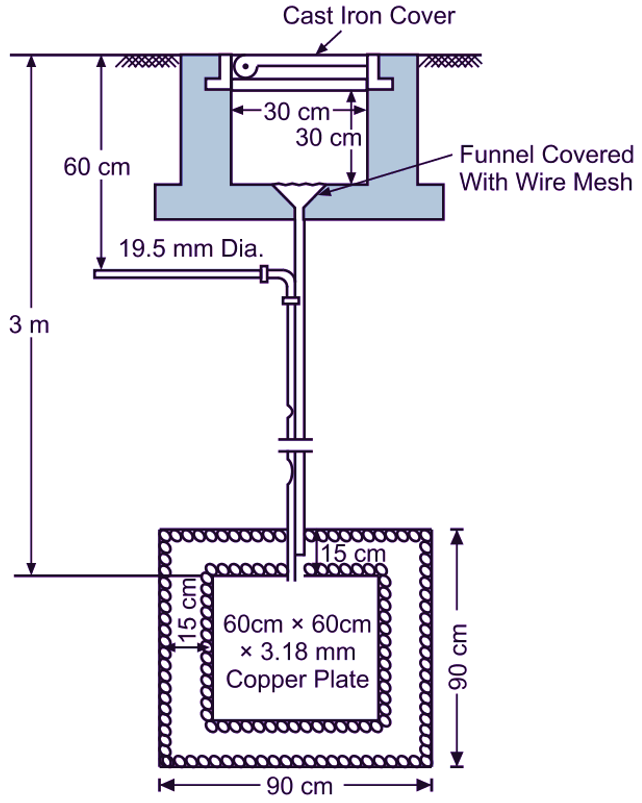
| Feature | Details |
|---|---|
| Electrode | Copper or GI plate (typically 600mm × 600mm × 6mm) |
| Installation | Buried vertically in an earth pit |
| Best For | Small to medium buildings, transformer neutrals |
| Advantages | Low resistance, stable performance |
| Disadvantages | Requires large excavation, higher material cost |
2. Pipe Earthing
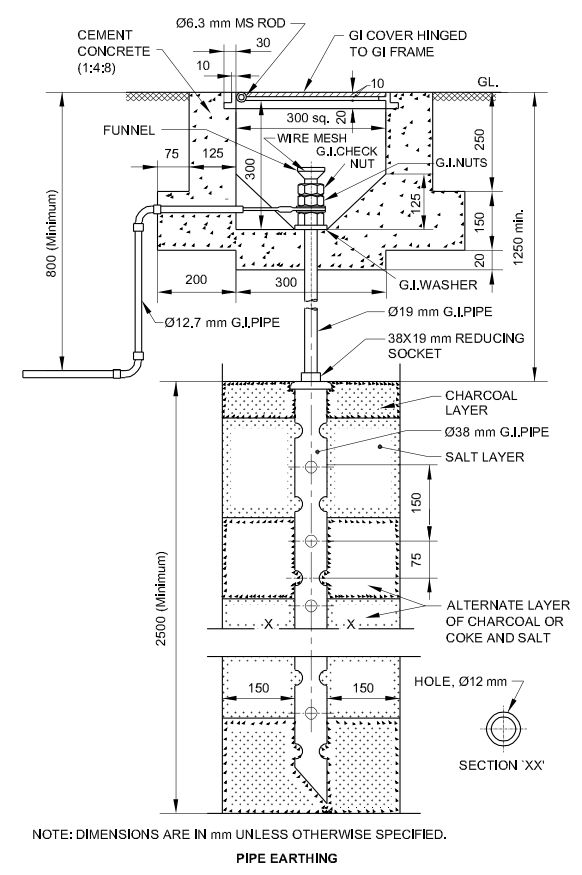
| Feature | Details |
|---|---|
| Electrode | GI pipe (40mm to 80mm diameter, 2.5-3m length) |
| Installation | Vertically driven into ground |
| Best For | Residential buildings, rural installations |
| Advantages | Simple installation, cost-effective, easy to maintain |
| Disadvantages | Susceptible to corrosion over time |
3. Rod Earthing
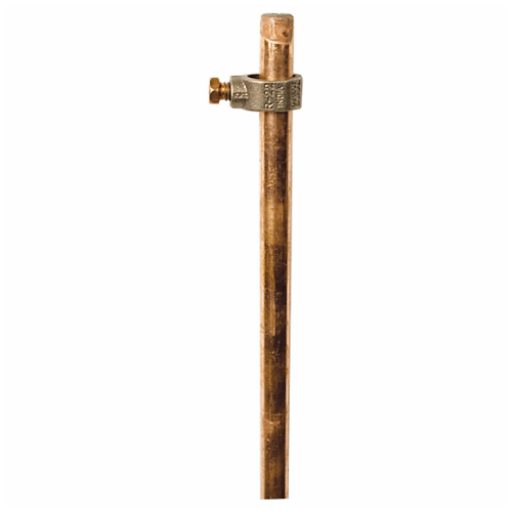
| Feature | Details |
|---|---|
| Electrode | Solid copper or copper-bonded steel rod (12-25mm diameter) |
| Installation | Driven deep into ground (3-6 meters) |
| Best For | High soil resistivity areas, rocky terrain |
| Advantages | Deep grounding, low resistance, long life |
| Disadvantages | Higher cost, requires special driving equipment |
4. Strip or Conductor Earthing

| Feature | Details |
|---|---|
| Electrode | Flat copper or GI strip (30mm × 3mm typical) |
| Installation | Buried horizontally in a trench |
| Best For | Large industrial plants, substations |
| Advantages | Covers large area, effective for low resistivity soils |
| Disadvantages | Requires extensive trenching |
5. Chemical Earthing
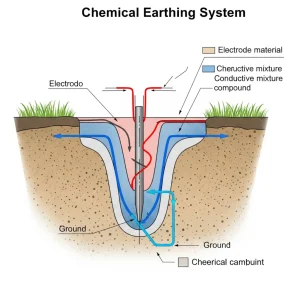
| Feature | Details |
|---|---|
| Electrode | Copper pipe with backfill compound |
| Installation | Vertical borehole with chemical backfill |
| Best For | High resistivity or dry soil areas |
| Advantages | Low and stable resistance, maintenance-free |
| Disadvantages | Higher initial cost |
Earthing System Materials: Which One is Best?
The choice of material significantly impacts the performance, longevity, and cost of your earthing system.
Copper (Cu)
| Property | Specification |
|---|---|
| Conductivity | Excellent (100% IACS) |
| Corrosion Resistance | Excellent |
| Lifespan | 30-50+ years |
| Cost | High |
| Best Application | Critical facilities, coastal areas, chemical plants |
Pros: Best conductivity, virtually no corrosion, very long life, reliable performance. Cons: Expensive, prone to theft.
Galvanized Iron (GI) / Galvanized Steel
| Property | Specification |
|---|---|
| Conductivity | Fair (10-20% IACS) |
| Corrosion Resistance | Moderate (zinc coating) |
| Lifespan | 10-20 years |
| Cost | Low |
| Best Application | Residential, temporary installations, dry soil |
Pros: Economical, widely available, adequate for many applications. Cons: Zinc coating degrades over time, shorter lifespan, higher maintenance.
Copper-Bonded Steel
| Property | Specification |
|---|---|
| Conductivity | Good (outer copper layer) |
| Corrosion Resistance | Good |
| Lifespan | 20-30 years |
| Cost | Medium |
| Best Application | Rod earthing in normal soils |
Pros: Combines steel strength with copper conductivity, cost-effective alternative to solid copper. Cons: If copper layer is damaged, steel core can corrode.